Solar PV cable application
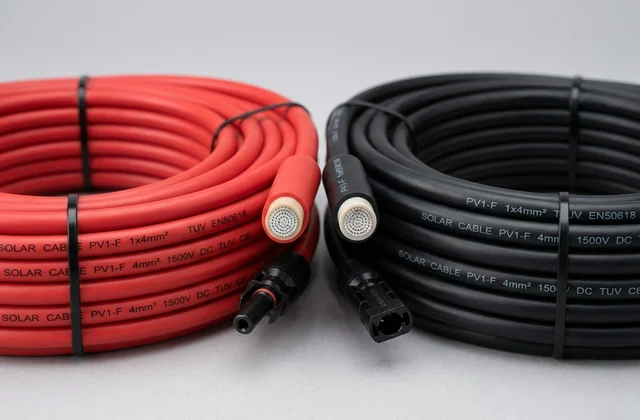
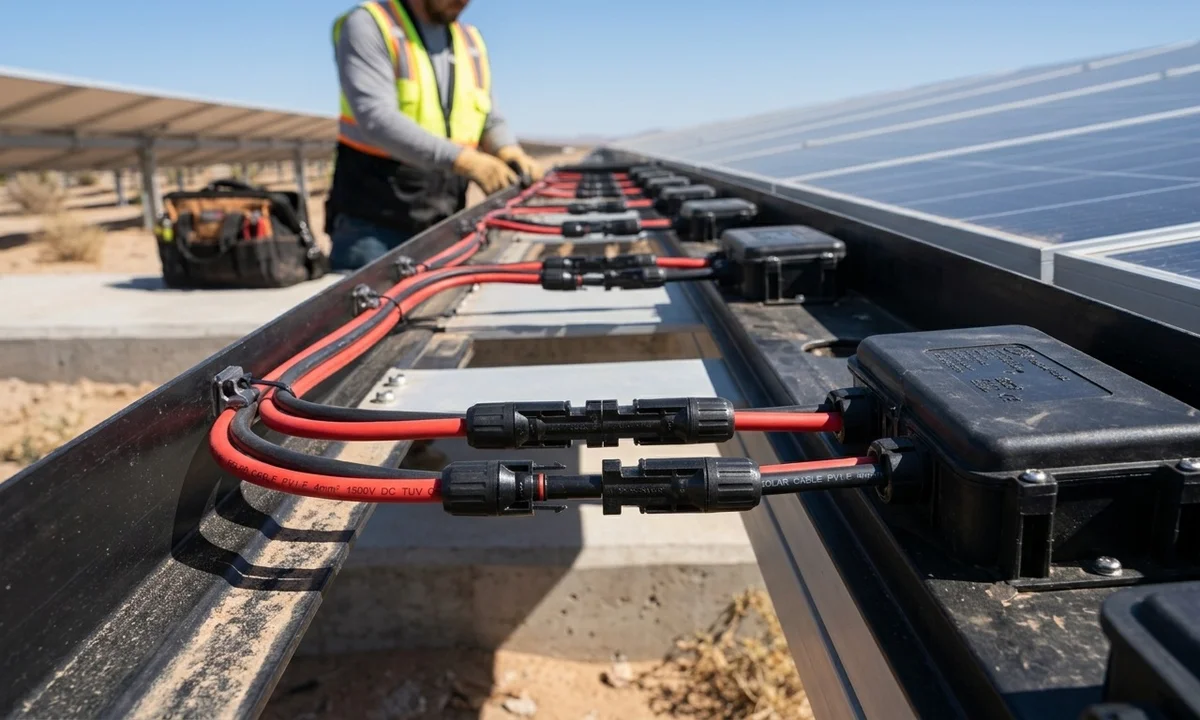
Solar PV DC cable connects modules, string or combiner equipment and inverters on the DC side of a photovoltaic system. Rooftop systems, commercial arrays and utility-scale plants can impose different route lengths, ambient temperatures, grouping, mechanical protection and documentation requirements.
The page targets project engineers, EPC contractors, distributors and procurement teams comparing conductor size, construction, standards evidence, packing and export documentation.
Solar PV Cable Construction and Size Selection
Review the cable construction and common PV conductor sizes below. Final cable sizing should be confirmed against current, route length, voltage drop, installation method and operating conditions.
Cable Construction
| Layer | Specification |
|---|---|
| Conductor | Class 5 flexible stranded tinned copper, IEC 60228 |
| Insulation | Halogen-free cross-linked compound |
| Outer Sheath | Halogen-free cross-linked compound, black / red |
| Cable Form | Single-core solar PV DC cable |
| Cable Designation | H1Z2Z2-K |
Reference Solar Cable Size Selection
| Nominal Size | Typical Selection Context |
|---|---|
| 1 × 4 mm² | Common starting size for PV string wiring. |
| 1 × 6 mm² | Common choice where a larger conductor is required for current capacity or voltage-drop control. |
| 1 × 10 mm² | Consider for higher-current or longer DC cable routes. |
| 1 × 16 mm² | Consider for higher-current or longer DC feeder sections. |
| 25–120 mm² | Larger project-specific DC cable options. |
Cable size must be selected according to actual current, route length, allowable voltage drop, installation method and temperature conditions. This table is a selection guide, not an ampacity calculation.
IEC 62930 and EN 50618 context
IEC 62930 covers single-core cross-linked insulated power cables with a cross-linked sheath for the DC side of photovoltaic systems, with rated DC voltage up to and including 1.5 kV within its scope. EN 50618 and the H1Z2Z2-K designation are separate European project references.
The requested standard, marking, test evidence and any third-party approval must be confirmed for the exact cable and conductor size ordered. A standard reference is not presented as a TÜV certificate or automatic SABER registration.
Cable sizing
Provide system voltage, design current, route length, installation method, grouping, ambient temperature and allowable voltage drop. The design engineer should apply the project’s current-carrying-capacity and derating method; a generic online table should not replace the system calculation.
RFQ and quality control
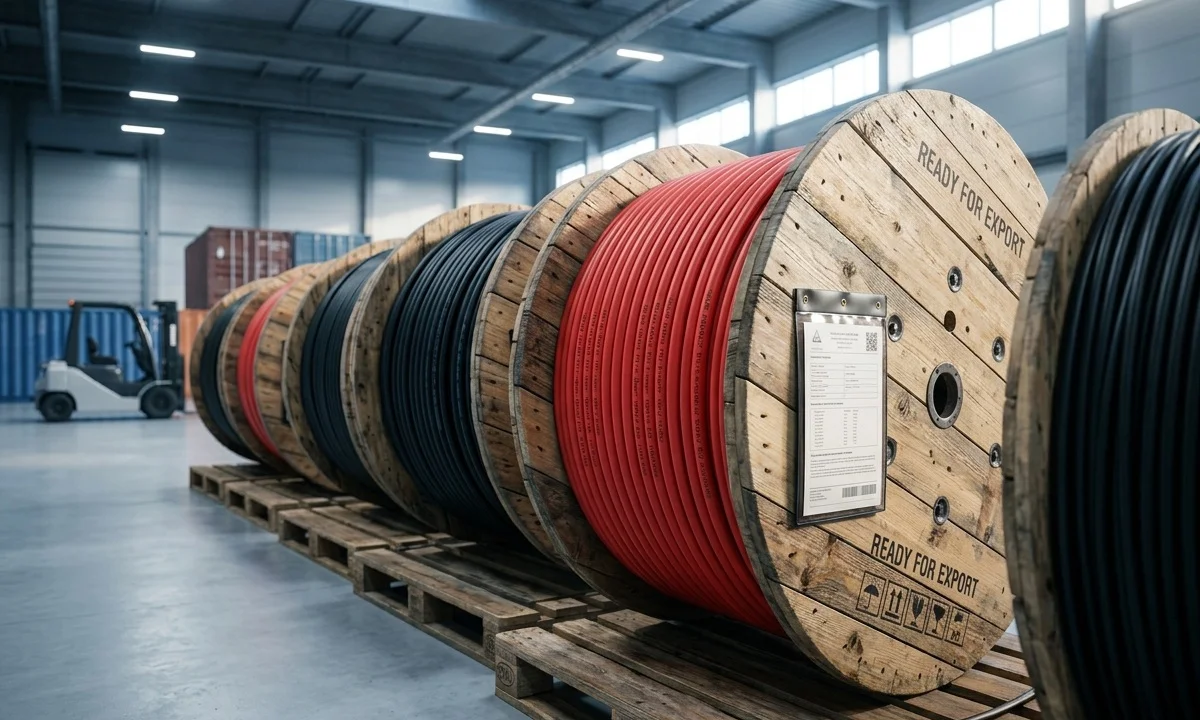
Send the required standard, conductor size or sizing inputs, black/red colour requirement, route and environment, total length, packing, printing, destination and documents. Every finished length undergoes 100% continuity testing before shipment.
Frequently asked questions
Are IEC 62930 and EN 50618 the same certificate?
No. They are technical references with different publication and conformity contexts. The applicable construction and evidence must be confirmed for the ordered cable.
Can one conductor size be used for every PV string?
No. Design current, route length, voltage drop, ambient temperature, grouping and installation method affect conductor sizing.